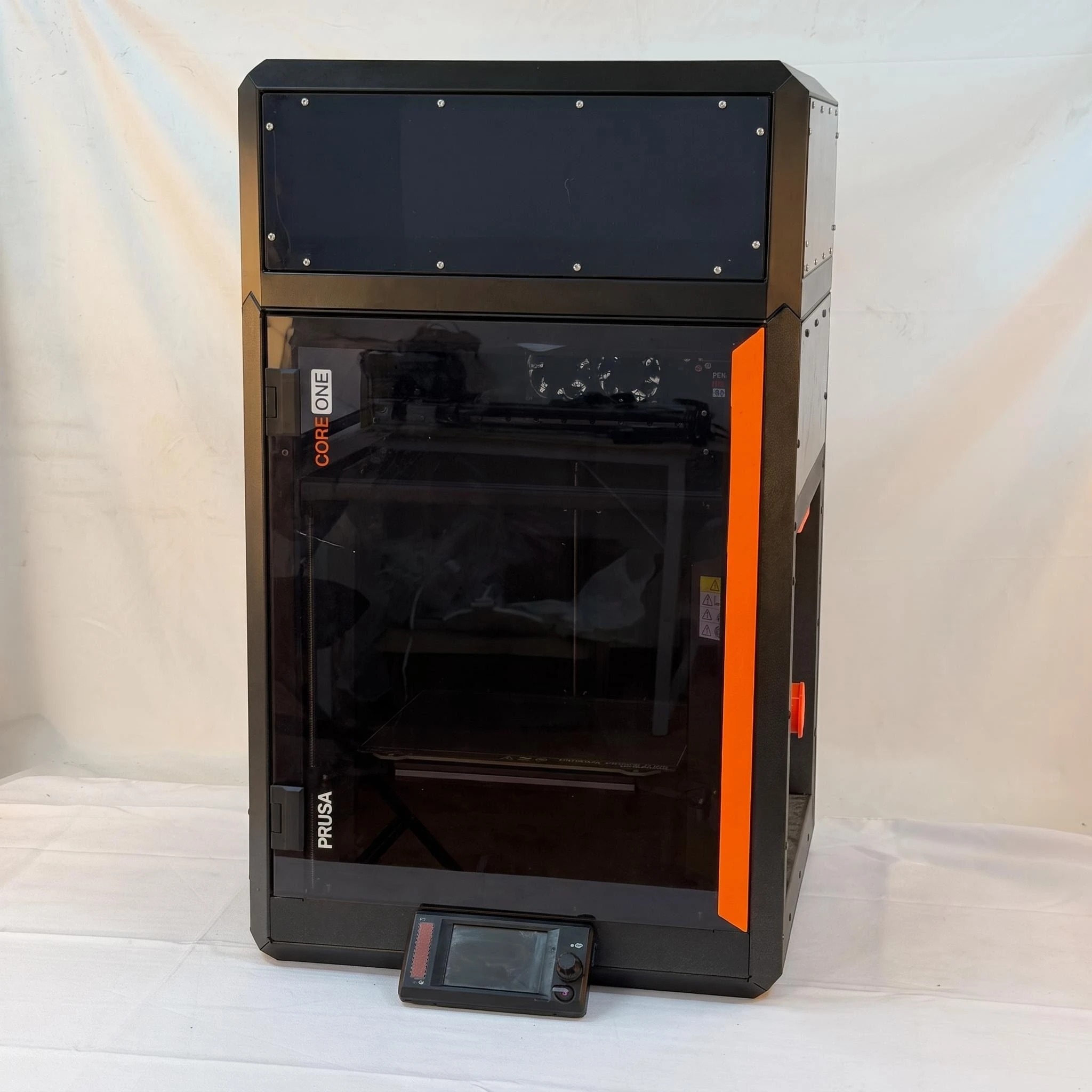
Blurolls Metal OneTop for Prusa CORE One
The original OneTop concept was created as a modular top enclosure for the Prusa CORE One, providing additional space for multi-material systems such as MMU3 and INDX while preserving the enclosed printing environment and the distinctive CORE One design language. 3D Printer Files | 3D GO
Blurolls takes this concept one step further.
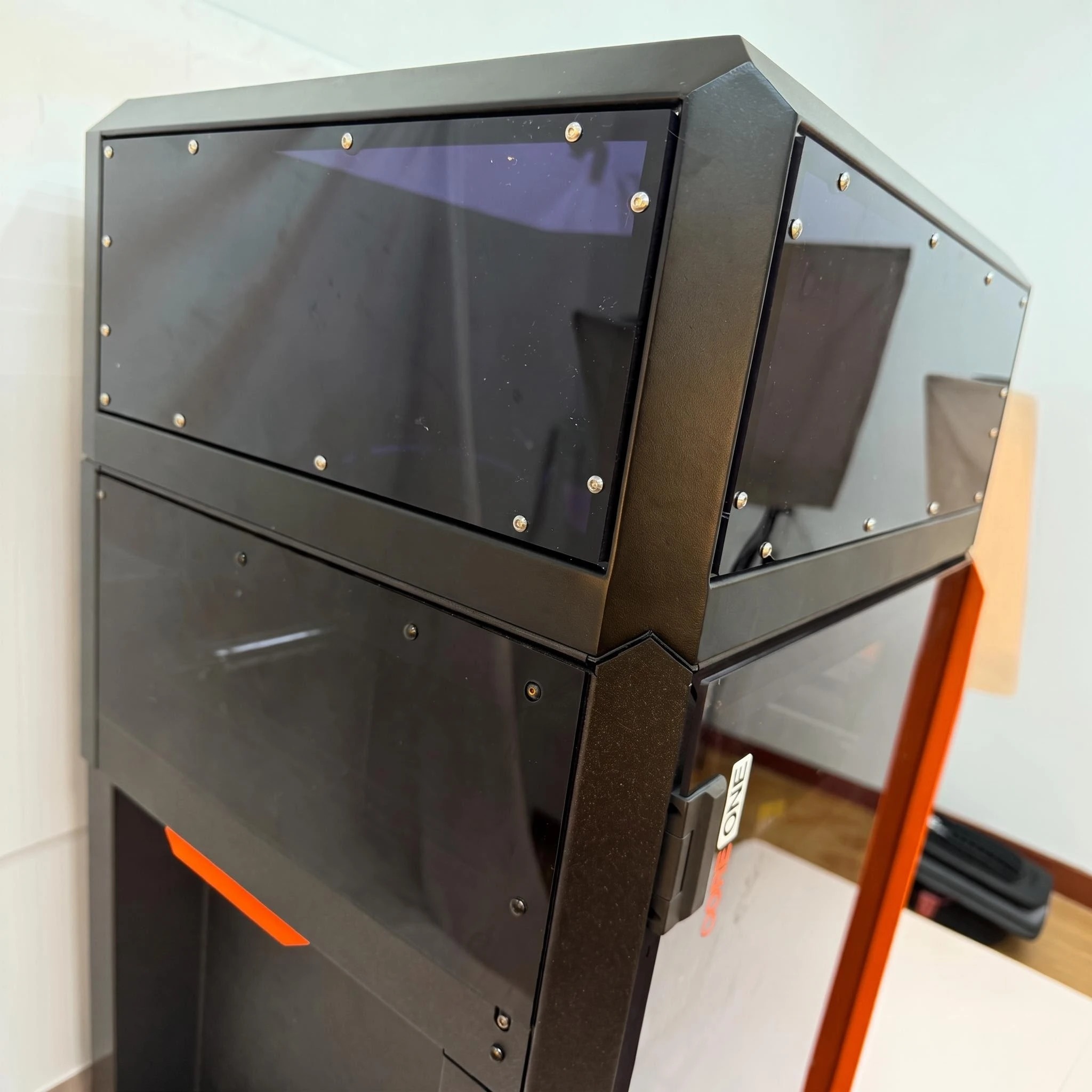
Instead of relying on a large number of printed structural components, our version uses a precision-fabricated metal frame combined with transparent side panels, creating a stronger, cleaner and more durable enclosure suitable for users who want a finished product rather than a large DIY printing project.
Why a Metal OneTop?
The original OneTop requires approximately 1 kg of filament for the main printed components, together with numerous heat-set inserts and screws. Correct dimensional calibration is also important because inaccurate printed parts may affect panel fitment and assembly. 3D Printer Files | 3D GO
Our metal version eliminates most of that work.
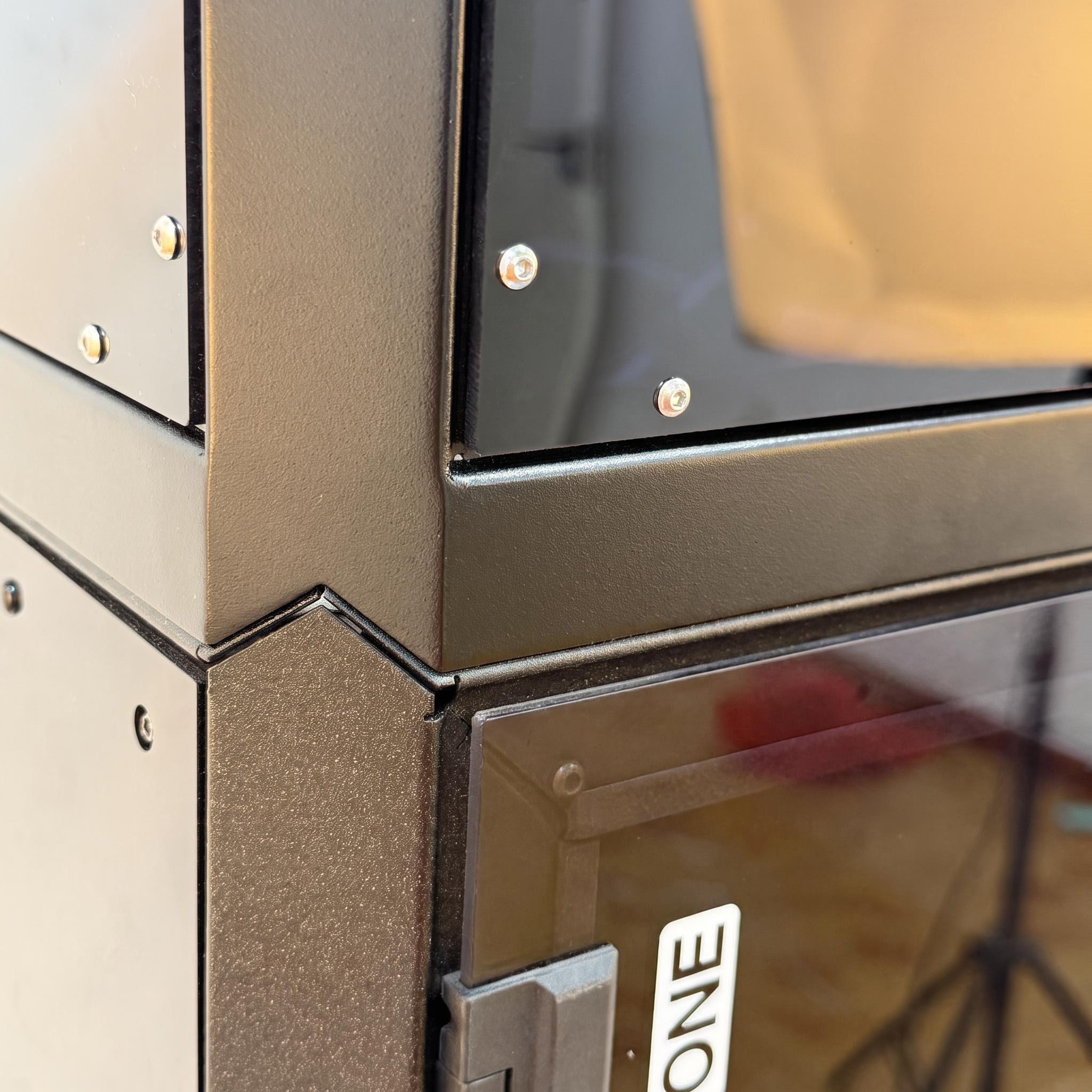
You get a ready-made structural enclosure with consistent dimensions, high rigidity and a finish that looks much closer to a commercial printer accessory.
No need to print a large enclosure frame
Save many hours of printing and avoid consuming around a kilogram of filament for the primary structure.
No worries about warping or dimensional variation
Large PETG / ABS / ASA parts can shrink or distort depending on printer calibration and material settings. A formed metal frame provides much more predictable dimensions.
Higher structural rigidity
The sheet-metal structure provides excellent stiffness and keeps the enclosure square during installation and long-term use.
Cleaner, more professional appearance
The powder-coated black metal frame blends naturally with the industrial styling of the Prusa CORE One.
Designed for MMU3 and INDX
When installing multi-material or multi-tool systems, PTFE tubes require significantly more vertical clearance above the printer.
OneTop creates approximately 163 mm of additional height, providing considerably more room for tube routing while allowing the machine to remain enclosed. 3D Printer Files | 3D GO
This makes it particularly suitable for:
Prusa CORE One + MMU3
Prusa CORE One + INDX
Custom multi-filament / PTFE routing systems
Future CORE One expansion projects
A CORE One owner who installed the original OneTop specifically noted that it provides the extra clearance required for multi-material tubing while retaining the enclosed design and the straight-sided appearance of the printer. note(ノート)
Maintains the CORE One Design Language
One of the biggest advantages of OneTop is its appearance.
Instead of adding a bulky or obviously aftermarket structure to the top of the printer, the enclosure continues the vertical lines of the CORE One and creates a more integrated profile.
The dark transparent panels also visually match the existing enclosure.
From the front, the extension looks like a natural continuation of the printer rather than an accessory sitting on top.
This was one of the original design goals of OneTop: creating something that looks closer to an OEM component than an add-on. 3D Printer Files | 3D GO
Large Transparent Panels
The enclosure uses large dark transparent panels around the frame.
This provides several advantages:
- Maintains visibility into the upper printer area
- Keeps the appearance consistent with the CORE One
- Provides space for PTFE tubes and multi-material routing
- Helps preserve the enclosed printing environment
- Panels can be removed individually for maintenance
Compared with a completely opaque metal enclosure, the transparent design keeps the printer visually open without sacrificing the clean appearance.
Strong Sheet-Metal Construction
The Blurolls version replaces the primary printed frame with fabricated sheet metal.
This brings several practical advantages.
Higher rigidity
Metal is much less susceptible to deformation than large printed plastic sections.
Better dimensional consistency
CNC cutting and bending provide repeatable geometry between production units.
Better long-term durability
The structure is suitable for repeated installation, removal and maintenance.
Better heat resistance
For users frequently printing ABS, ASA or other high-temperature materials, the metal structure is less sensitive to elevated enclosure temperatures than printed PETG components.
Premium surface finish
The black coated surface closely matches the industrial styling of the CORE One.
Modular Design
OneTop was originally designed as an expandable platform rather than simply a taller lid.
The concept includes multiple mounting points that can be used for future accessories, including lighting, ventilation and other functional modules. 3D Printer Files | 3D GO
The Blurolls metal frame preserves this modular philosophy.
Potential additions include:
- LED lighting
- Cable-management accessories
- PTFE routing modules
- Filament-management accessories
- Ventilation systems
- Servo-controlled ventilation
- Sensors
- Future OneTop accessories
This makes the enclosure useful not only for MMU or INDX users today, but also as a platform for future CORE One modifications.
Easier Installation
The enclosure is designed to sit above the existing CORE One structure without requiring permanent modification of the printer.
The original OneTop mounting concept uses its geometry together with integrated neodymium magnets, allowing the enclosure to be removed for maintenance when necessary.
This means the CORE One itself remains largely unchanged.
For maintenance, filament routing or machine upgrades, the enclosure can be accessed or removed without redesigning the printer.
Ideal for Enclosed High-Temperature Printing
MMU and INDX installations can require the original top configuration to be opened or changed because of PTFE tube clearance.
That may compromise the enclosed environment that makes CORE One attractive for materials such as ABS and ASA.
OneTop solves this problem by moving the roof upward instead of removing the enclosure altogether.
This provides space for multi-material hardware while keeping the printer enclosed.
An independent CORE One user described precisely this benefit: additional clearance for multi-material hardware while maintaining enclosure functionality for materials requiring elevated chamber temperatures.


